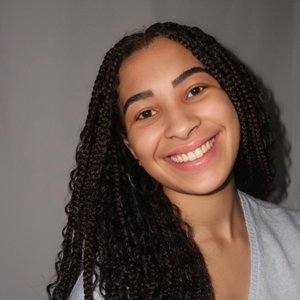
21 Looks Nothing Like I Imagined—And That's Okay
By Trinity Barnette
On young motherhood, grieving my old life, and learning to embrace the unexpected.
October 11, 2026. My 21st birthday.
For years, I imagined this milestone looking a very specific way. I pictured myself partying, drinking excessively, celebrating my newfound freedom, and probably waking up the following morning questioning every decision I had made the night before. You know, the traditional American 21st birthday experience.
What I didn’t imagine was celebrating with a one-month-old baby at home.
Yet, here I am. Twenty-one years old, a college student, an aspiring attorney, a writer, and now, a mother.
If you had told my teenage self that I would spend my 21st birthday coordinating childcare arrangements so my boyfriend and I could go out and celebrate, I probably would’ve laughed in your face.
But life has an interesting way of reminding us that our plans are merely suggestions.
Over the past year, I’ve experienced more change than I ever anticipated. I’ve navigated pregnancy, childbirth, postpartum recovery, and the overwhelming transition into motherhood, all before reaching an age I had spent years looking forward to.
And somewhere in the middle of it all, I’ve found myself grieving a version of my life that I never expected to lose so soon.
This birthday wasn’t just about turning 21. It was about confronting the distance between the life I imagined and the life I’m actually living.
And learning that maybe, just maybe, that’s okay.
The 21st Birthday I Always Imagined
Growing up, turning 21 felt like one of those milestones that represented something bigger than just another birthday.
It meant freedom. Independence. Adulthood. The ability to walk into a bar, order a drink, and celebrate without worrying about whether someone was going to ask for identification and immediately ruin the fun.
I envisioned a birthday centered entirely around myself.
I wanted to party, get ridiculously drunk, enjoy my youth, and celebrate the beginning of a new chapter. Nothing particularly profound or life-changing. Just the opportunity to be young, carefree, and maybe a little irresponsible for a night.
And frankly, I don’t think there was anything wrong with wanting that.
For years, that was the vision. I never imagined that by the time I reached 21, my life would revolve around feeding schedules, diaper changes, interrupted sleep, and the needs of a tiny human being who couldn’t care less that his mother had just reached a major milestone.
When I became pregnant at 20, I knew my life was about to change. Obviously, having a baby isn’t exactly a minor adjustment.
But during those early months, I wasn’t thinking about my 21st birthday. I was focused on processing the pregnancy itself, navigating the physical and emotional changes, and preparing for a future that suddenly looked very different.
It wasn’t until later that I began to recognize how many of the experiences I had anticipated would now require additional planning, compromises, and adjustments.
Including something as simple as celebrating my own birthday.
Turning 21 as a Mother
On September 12, 2026, I gave birth to my son, Hudson Emmanuel.
Exactly 29 days later, I turned 21.
And the following day, he turned one month old.
Talk about a busy month.
While I was reaching a milestone I had anticipated for years, my son was simultaneously reaching his very first monthly milestone. Suddenly, October wasn’t just about my birthday anymore. It was also about celebrating the little person who had completely changed my life.
Instead of waking up on my birthday with nothing to worry about besides how I wanted to spend the day, I had responsibilities that couldn’t simply be postponed.
My boyfriend and I had to coordinate childcare with my family so we could spend time together and celebrate. Something that once would’ve required little more than deciding where to go now involved making sure our son was cared for while we were away.
And this is becoming an increasingly familiar reality.
Motherhood doesn’t stop because I have something to celebrate. Hudson doesn’t suddenly become independent because his mother wants a night out. His needs continue regardless of what day it is or what plans I’ve made.
That’s been one of the biggest adjustments for me.
Before motherhood, I had the freedom to structure my days around my own needs, interests, and responsibilities. Now, even the simplest plans require consideration of someone else.
I’m learning how to celebrate myself while simultaneously being responsible for another human being.
And while I know that doesn’t mean I can never enjoy myself again, it does mean that enjoyment looks different now.
I’m still allowed to have fun. I’m still allowed to celebrate milestones. I’m still allowed to be young.
But I’m also a mother.
And learning how to balance those identities has been far more complicated than I ever imagined.
Grieving a Life That Isn’t Actually Gone
One of the strangest parts of becoming a mother has been experiencing grief over a life that technically hasn’t ended.
When we think about grief, we often associate it with death or permanent loss. But I’ve learned that grief can also accompany major life transitions, particularly when those transitions happen before we’re emotionally prepared for them.
I miss my old life.
I miss the spontaneity, the independence, and the ability to make decisions without considering how they’ll affect someone else. I miss having complete control over my schedule and being able to prioritize myself without having to coordinate around another person’s needs.
And sometimes, I miss the version of myself who existed before motherhood.
That doesn’t mean I regret my son or that I don’t want him in my life. It means I’m still adjusting to the reality that my life has changed significantly in a relatively short period.
There’s a difference.
What’s particularly difficult is knowing that many of the things I’m grieving aren’t necessarily gone forever.
I’ll eventually have more independence. Hudson will grow older, become less dependent on me, and develop his own interests, routines, and personality. I’ll have more opportunities to pursue the things I enjoy without needing to plan every detail around the demands of caring for a newborn.
I’ll be able to reclaim parts of my previous lifestyle while discovering new aspects of myself along the way.
But knowing that something is temporary doesn’t automatically make it easy.
I can understand intellectually that this stage won’t last forever while still struggling emotionally with what it requires of me right now.
And I think that’s something we don’t discuss enough.
There’s an expectation that becoming a mother should immediately transform your priorities, interests, and sense of fulfillment. That once your baby arrives, everything else should somehow become secondary without any emotional resistance.
But identity doesn’t work that way.
I spent 20 years developing my personality, interests, ambitions, and understanding of who I am. Those things didn’t disappear the moment I gave birth.
I’m still Trinity.
I’m just learning how to be Trinity while also being Hudson’s mother.
And I don’t believe those identities should have to compete with each other.
The Isolation of Being a Young Mother
Isolation isn’t a new experience for me.
In fact, it’s something I’ve been familiar with for years.
I transitioned to homeschooling in eighth grade and continued my education online through high school. After graduating, I enrolled in college online, where I’ve continued pursuing my degree in criminal justice.
By the end of this semester, I’ll have reached junior standing.
While online education has provided me with flexibility and independence, it has also meant spending much of my adolescence and early adulthood outside the traditional social environments many people my age experience.
I didn’t have the typical high school experience, and I haven’t had the traditional college experience either.
I’ve become accustomed to navigating much of my life independently.
But becoming pregnant at 20 introduced an entirely different kind of isolation.
During pregnancy, I watched relationships change and, in some cases, fade altogether. People I once communicated with became increasingly distant, and I found myself feeling alone during one of the most significant transitions of my life.
It was difficult.
Pregnancy was already physically and emotionally demanding, and experiencing those changes while feeling disconnected from others made the process even more overwhelming.
Now, as a young mother, I’m navigating another layer of that isolation.
At 21, many people are focused on college, careers, relationships, friendships, and discovering what adulthood means for them.
I’m doing many of those things too, but I’m also raising a child.
My daily responsibilities look different. My priorities require more coordination. My ability to participate in spontaneous social activities has changed.
And sometimes, that difference feels incredibly isolating.
It’s strange to be at an age traditionally associated with newfound independence while simultaneously experiencing one of the most demanding forms of responsibility.
I don’t believe there’s one correct timeline for adulthood, and I certainly don’t think becoming a parent young makes someone less capable of building a fulfilling life.
But I do think it’s important to acknowledge that taking a different path can sometimes feel lonely.
Especially when that path wasn’t the one you originally envisioned.
Motherhood Didn’t Erase My Ambitions
If there’s one thing motherhood hasn’t changed about me, it’s my ambition.
Long before becoming pregnant, I had a vision for my future.
I wanted to finish college, attend law school, become an attorney, and build a successful career in the legal field.
And guess what?
I still do.
I’m currently pursuing my bachelor’s degree in criminal justice at the University of Cincinnati, and my long-term goal remains becoming a prosecutor.
Next year, I plan to pursue an internship, begin preparing for the Law School Admission Test (LSAT), and continue working toward applying to law schools.
Eventually, I want to build a career doing work I’m genuinely passionate about.
None of those goals disappeared because I became a mother.
Will pursuing them be more challenging now? Absolutely.
I’ll have to navigate childcare, academic responsibilities, financial considerations, and the demands of raising a child while working toward a career that requires years of education and dedication.
But I’ve never been someone who shies away from a challenge.
If anything, I tend to find them motivating.
And while motherhood has introduced circumstances I never anticipated, I refuse to believe that becoming a parent means abandoning the future I’ve worked toward.
I don’t want my entire identity to revolve around motherhood.
I want to be a mother, a writer, a college graduate, an attorney, and an individual with interests and accomplishments that exist independently of my parental responsibilities.
I want Hudson to grow up knowing that his mother pursued her ambitions, even when doing so required additional sacrifices and determination.
Not because motherhood wasn’t important to her, but because her dreams mattered too.
I think there’s a tendency to frame motherhood as the ultimate destination for women, as though everything we accomplished or hoped to accomplish beforehand was simply preparation for becoming someone’s mother.
But I don’t see my life that way.
Motherhood is part of my story.
It isn’t the entirety of it.
And while the path toward my goals may look different now, the destination remains the same.
Accepting the Life I Didn’t Plan
If you’ve made it this far expecting me to conclude with some profound revelation about how I’ve completely embraced motherhood and no longer miss my old life, I’m afraid I’m going to disappoint you.
I’m still figuring it out.
I’m still grieving parts of the life I imagined. I still miss my independence, and I still have moments when I wonder what my early twenties would’ve looked like if things had unfolded differently.
There are days when I feel optimistic about the future and others when the adjustment feels overwhelming.
And I’ve decided that I’m allowed to experience both.
Acceptance isn’t necessarily a single moment when everything suddenly makes sense. Sometimes, it’s a gradual process of learning to live with circumstances you didn’t anticipate while continuing to build a future you’re excited about.
I’m beginning to understand that I don’t have to love every aspect of my current reality to appreciate the possibilities that still exist within it.
I can miss my old life without wanting to erase my son from my new one.
I can struggle with motherhood while still caring deeply about the person I’m raising.
I can acknowledge that becoming a mother at 20 wasn’t part of my original plan without treating my future as though it’s somehow been ruined.
And perhaps most importantly, I can allow myself to grieve without placing an arbitrary deadline on when I’m supposed to feel better.
Turning 21 has reminded me that life doesn’t always unfold according to the timelines we create for ourselves.
Sometimes, the milestones we’ve spent years anticipating arrive under circumstances we never could’ve imagined.
Sometimes, the freedom we expected looks different.
And sometimes, growing older means accepting that the future isn’t nearly as predictable as we once believed.
I’m not writing this from a place of complete acceptance or emotional clarity. I’m writing as someone who is still navigating the transition, still processing the changes, and still learning how to reconcile the person I used to be with the person I’m becoming.
Writing has always been one of the ways I make sense of my experiences.
It allows me to examine emotions I might otherwise struggle to articulate, confront uncomfortable truths, and reflect on experiences that have shaped me.
Sharing something this personal isn’t necessarily easy, especially when motherhood is so often discussed through expectations of unconditional happiness, gratitude, and fulfillment.
But I know I’m not the only person who has experienced grief over a life transition that others might expect them to celebrate without hesitation.
Whether it’s becoming a parent, changing careers, losing a relationship, or simply reaching an age where life looks nothing like you expected, there’s something deeply human about mourning the future you once imagined.
And I wanted to share my experience because I know I’m not alone in that feeling.
So, here’s to 21.
Not the birthday I imagined, not the circumstances I planned, and certainly not the beginning of adulthood I spent years envisioning.
But it’s my life.
It’s still unfolding.
And while I’m learning to accept the unexpected, I’m also reminding myself that I have plenty of time to create new experiences, pursue my ambitions, rediscover my independence, and become the person I want to be.
I don’t have everything figured out.
I don’t need to.
I’m only 21, after all.